
DaNang Vietnam Fall 2025
Vietnam — Overall Impressions (with a Month-Long stay in Da Nang)
Our first trip to Vietnam was in 2016. We entered by bus from Phnom Penh into Ho Chi Minh City and then zig-zagged north for about three weeks, mostly by air, with a memorable week-long stop in Hoi An. To reach Hoi An, we flew to Da Nang International Airport, took a cab south to Hoi An, and on the return trip to the airport passed through Da Nang itself.
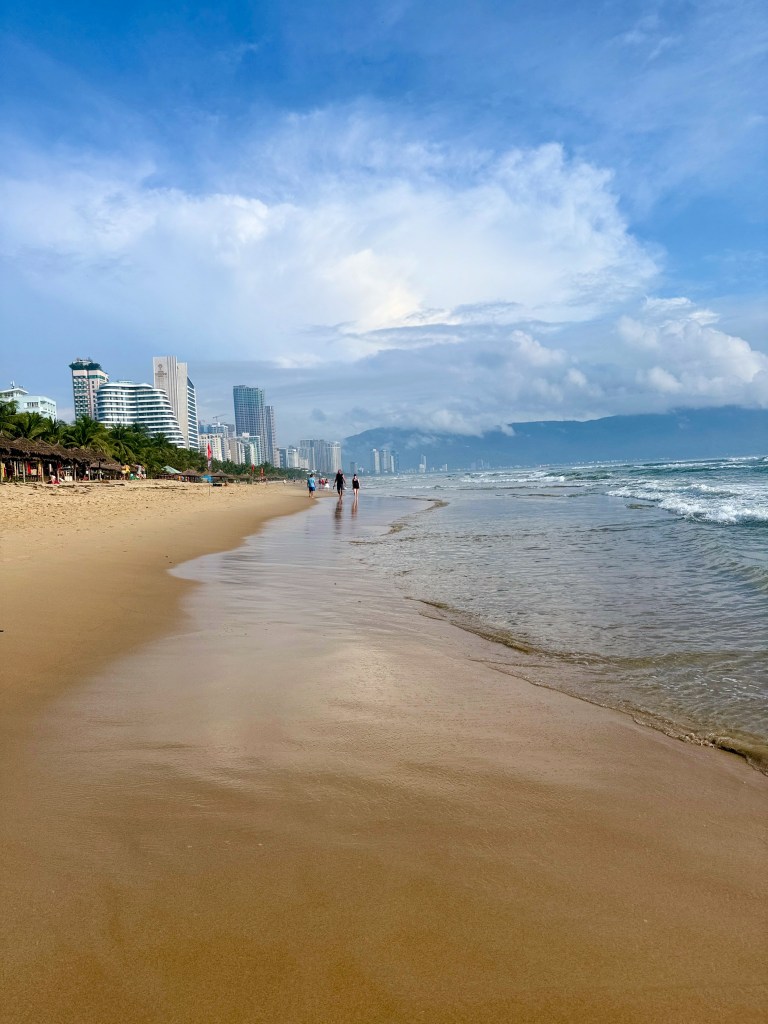
At the time, I remember my wife saying something like, “This beach town looks interesting—we should come back someday and check it out.”
Nine years later, we finally did.
And it turned out to be one of the best travel decisions we made in 2025.
Da Nang was the clear highlight of our fall 2025 Southeast Asia trip. Despite monsoon rains and two back-to-back typhoons that made direct hits, the city charmed us completely. It felt livable, grounded, friendly, and refreshingly unpretentious. Rain or not—life went on—and so did we.
Why Da Nang Worked So Well for Us
We stayed in the southern part of the Son Tra area, just north of An Thượng, and it was close to ideal. The neighborhood struck a near-perfect balance: tourists and locals, energy during the day, and actual quiet at night. Beach access was easy, daily services were close, and we were surrounded by good restaurants, cafes, spas, and shops.
Our Airbnb hosts and staff were wonderful—helpful without hovering—and the area felt safe and lived-in rather than resort-like. This mattered more to us than we expected.
Getting Around (The Art of the Weave)
Walking in Da Nang is easy. Crossing the street is not—at least not at first.
Intersections can feel chaotic, with motorbikes, cars, buses, and pushcarts flowing from every direction and very few traffic lights or walk signals. The secret, which locals seem to absorb at birth, is the weave. You don’t wait for traffic to stop. You move steadily, predictably, and let traffic flow around you.
It’s unnerving initially. Then, one day, you realize you’re doing it without thinking.
For longer distances, GRAB (the Southeast Asia equivalent of Uber) made everything easy. Drivers arrived quickly, rides were inexpensive, and it became our default option for shopping trips, errands, and anything too far—or too wet—to walk.
Food (As Good as Everyone Says)
Vietnam’s reputation for food is well earned, and Da Nang made sure we never forgot it.
Eating out was consistently excellent and remarkably affordable. Within easy walking distance of our apartment we had several standouts that quickly became part of our routine.
Paris Levain Café-Boulangerie
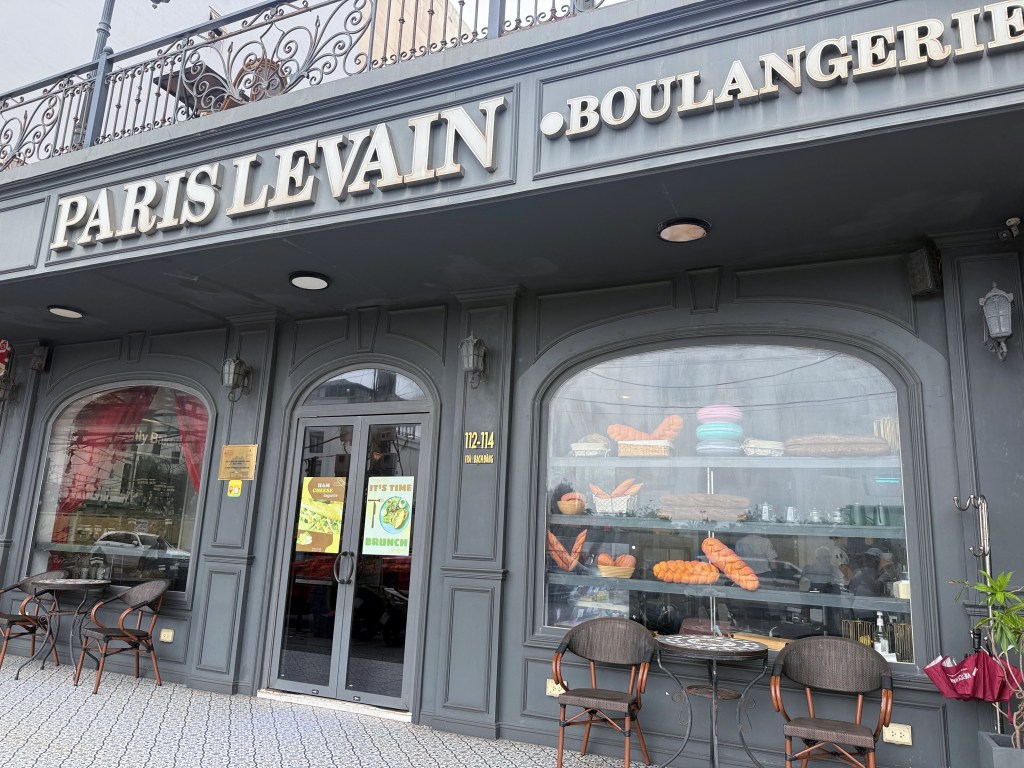
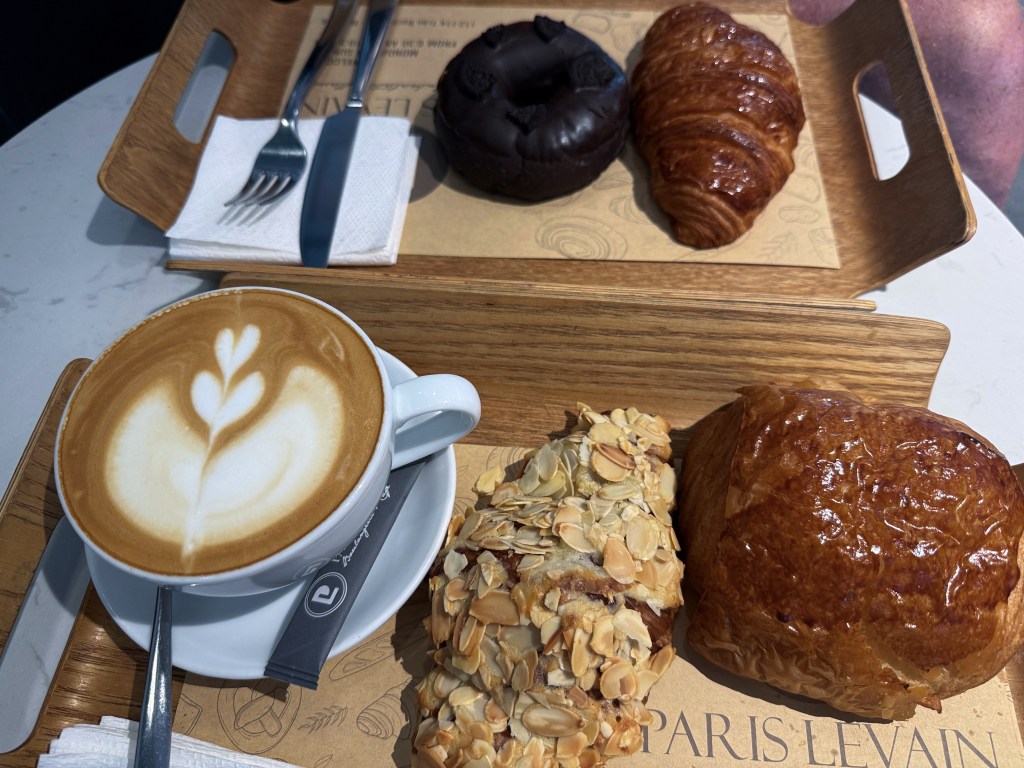
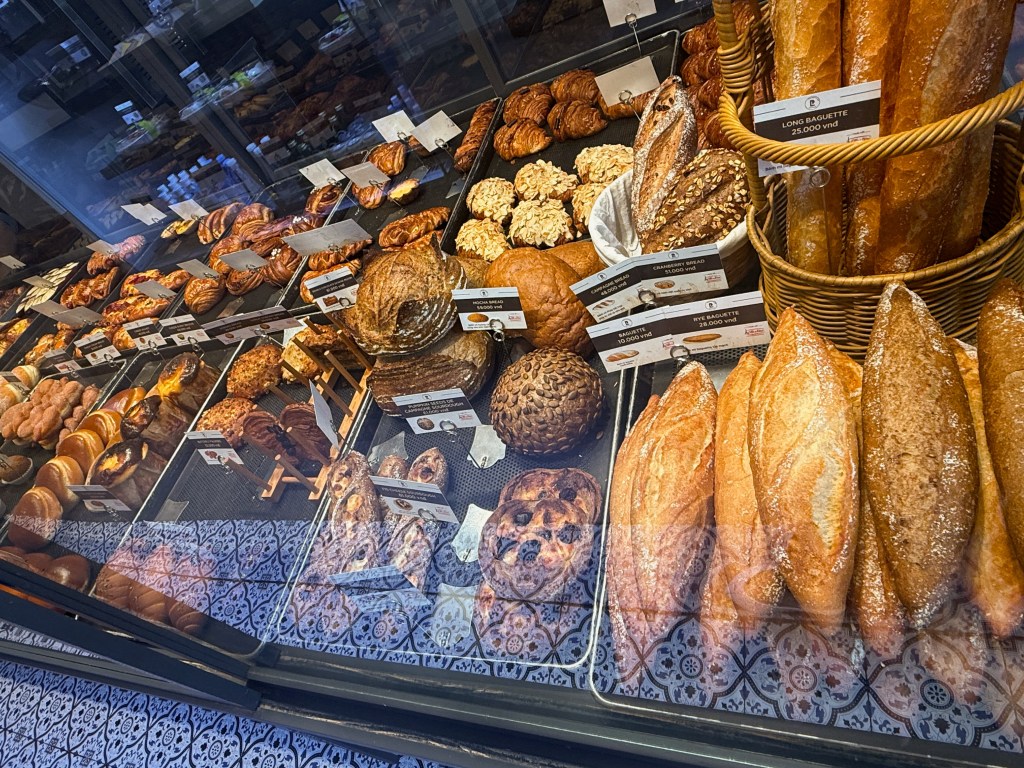
A charming French bakery with genuinely warm, friendly staff. This became a regular stop for pastries and coffee, and it felt like a neighborhood place rather than a tourist stop.
Bêp Cuôn Vietnamese Restaurant
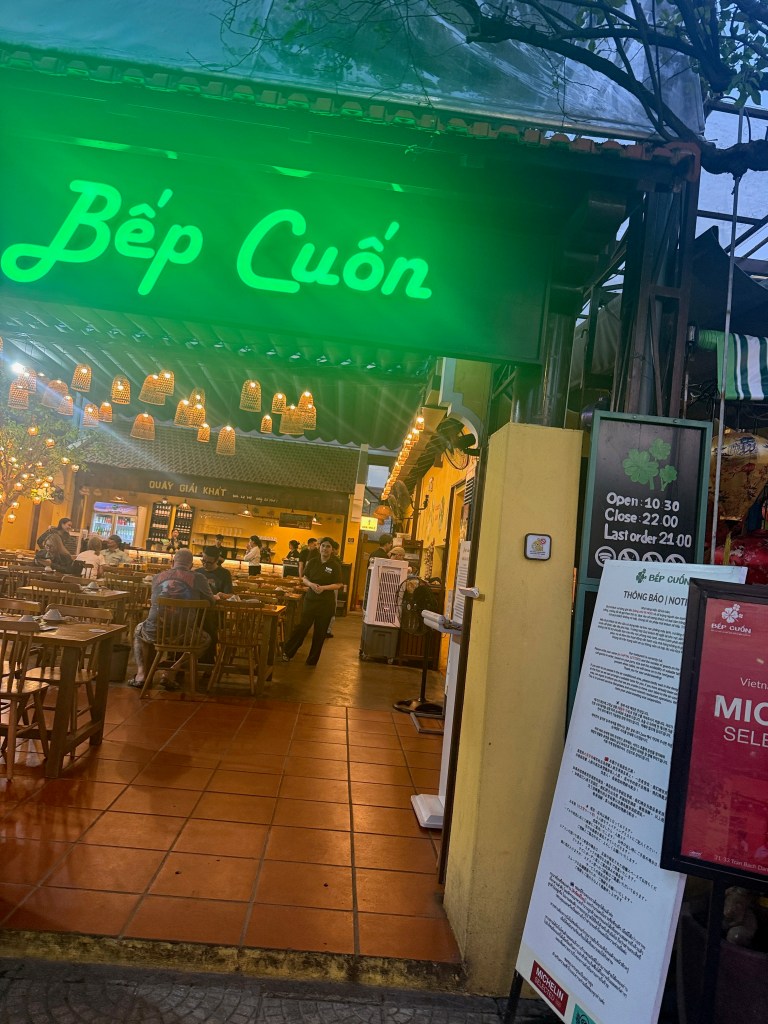
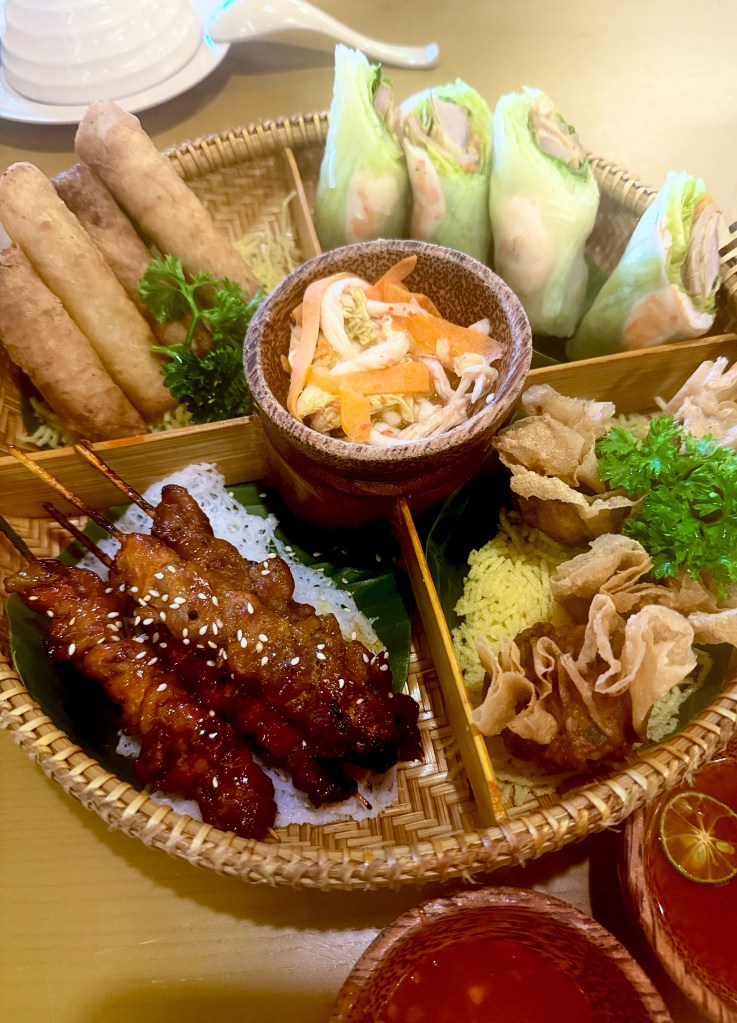
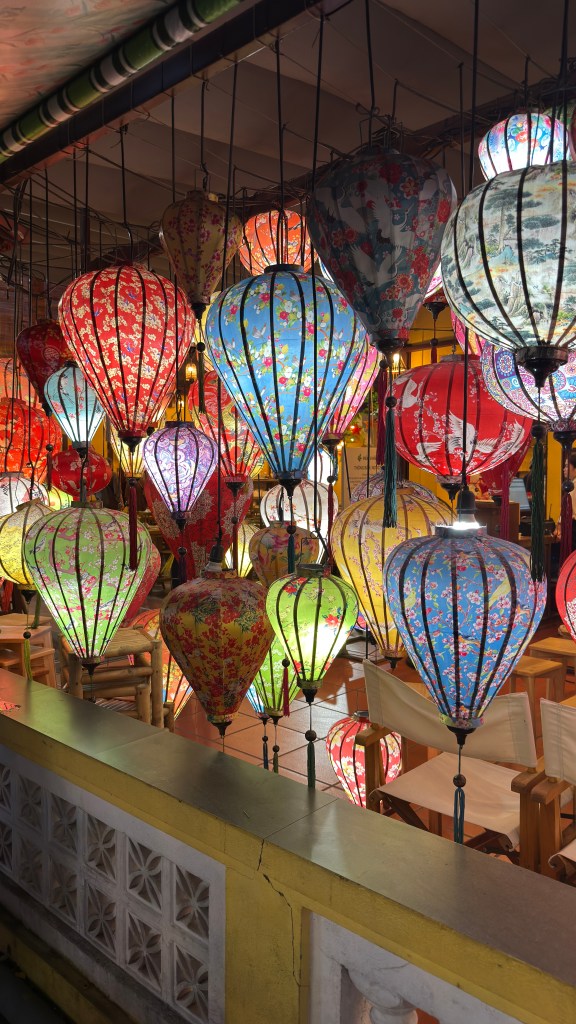
Michelin-selected in 2025 and located just around the corner from us. Elegant without being pretentious, and a great reminder of how refined Vietnamese cuisine can be.
Le Four French Restaurant & Pizza
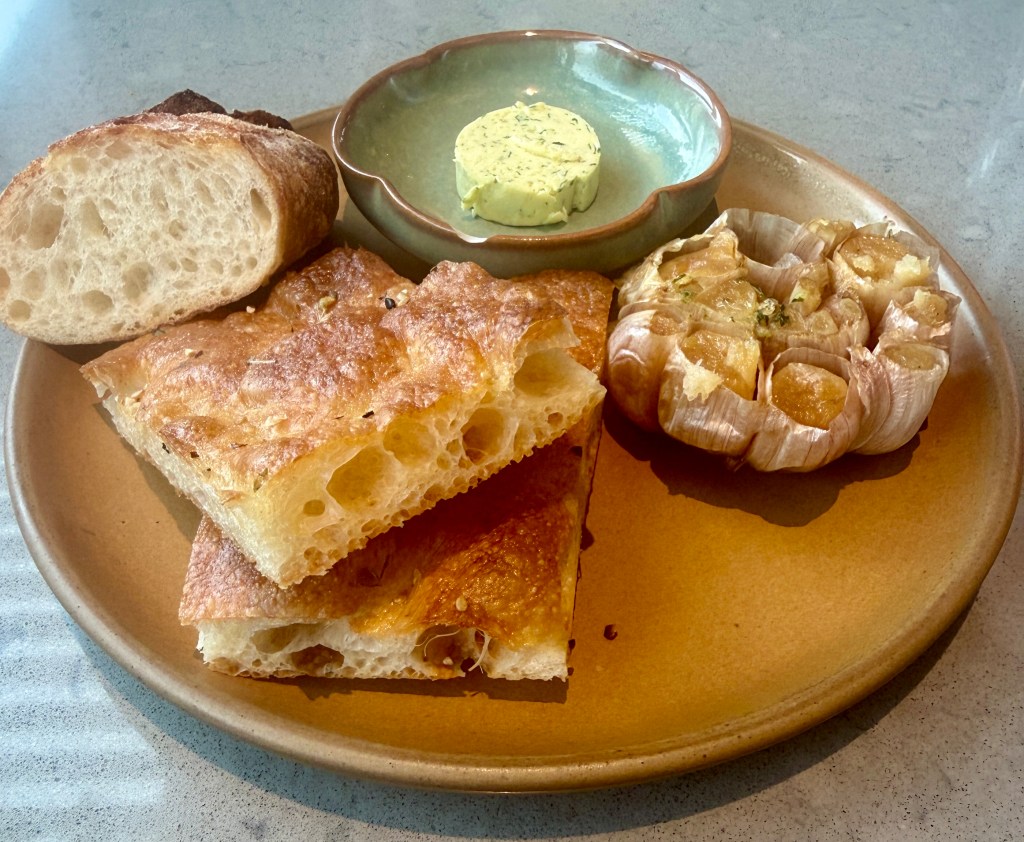

A solid choice when we wanted something familiar and comforting. Reliable, relaxed, and very easy to enjoy.
Highlands Café (Many locations)
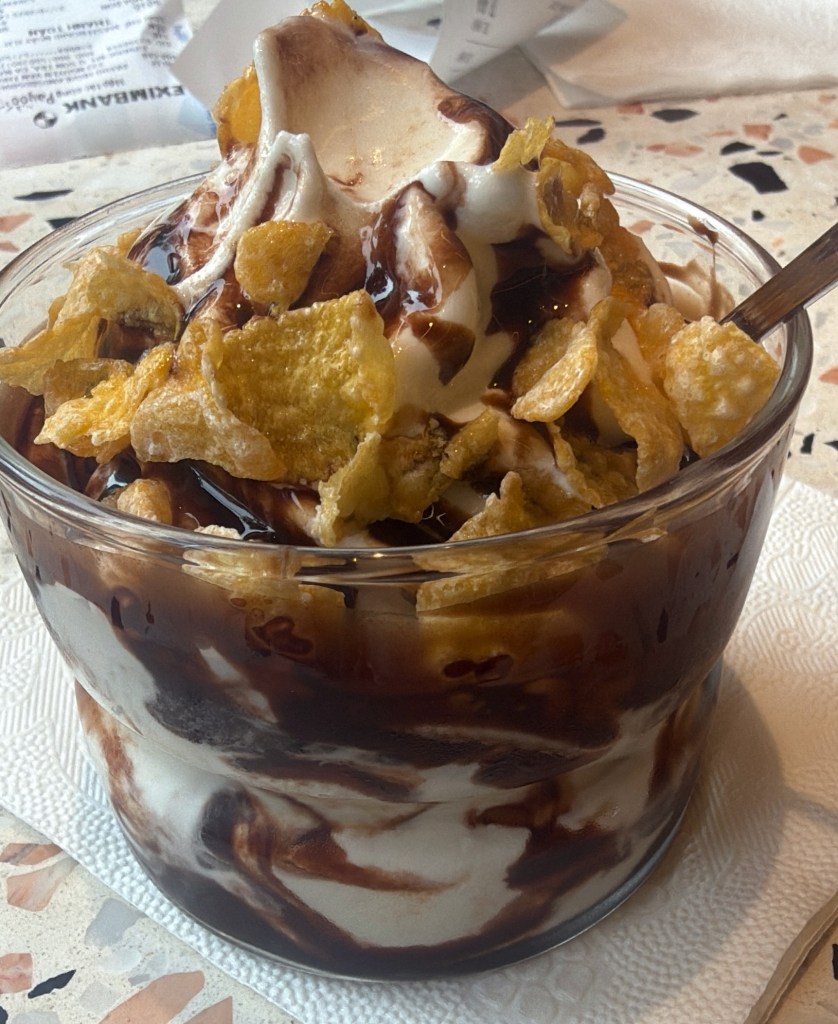
Our go-to stop for a simple ice cream treat and an easy pause in the middle of the day.
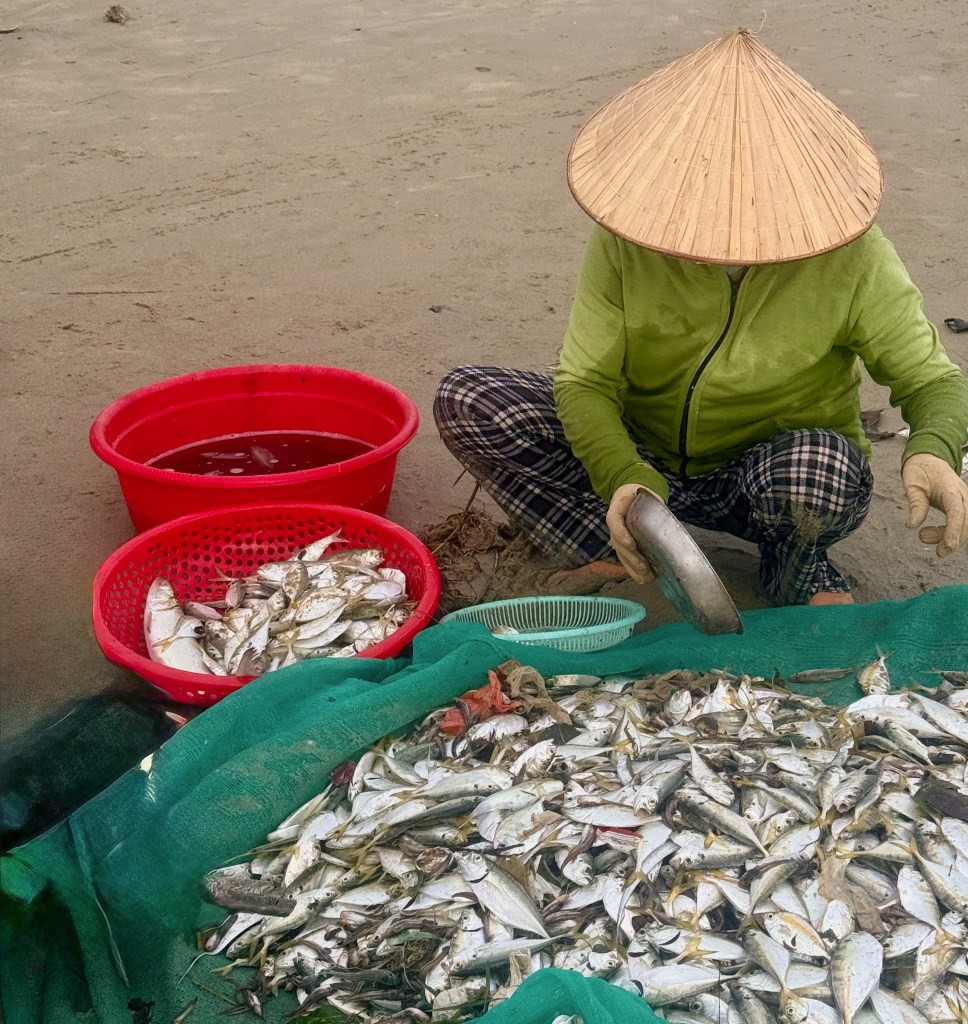
Beyond these, there were countless casual local spots where the food was excellent, the menus minimal, and pointing at what someone else was eating worked just fine.
Prices were low enough that cooking at home felt unnecessary most days. We did make simple breakfasts in our small kitchen and, on particularly rainy evenings, occasionally resorted to packaged ramen noodles. Comfort food is universal, and as my grandson would tell you, sometimes noodles are exactly the right answer.
Weather (Monsoon Means Business)
We knew we were arriving during monsoon season. We did not fully appreciate what that could mean.
There was widespread flooding across Vietnam during our stay, and entire towns were evacuated by the government. Da Nang took two direct typhoon hits within our first two weeks. Streets flooded, winds howled, plans changed.
And yet—this is what surprised us most—daily life continued. Businesses reopened quickly. People adapted. We adapted.
Rainy downtime turned out to be useful. We visited an excellent dental clinic (Lotus Smile Dental) for some routine dental work, indulged in massages, manicures/pedicures, had new prescription glasses made at Khánh Hưng Optical, and explored the always-fun-to-wander local markets. Da Nang is exceptionally good at taking care of practical life needs, rain or shine.
Where We Stayed
Our Airbnb cost under $500 per month, which still feels slightly absurd given the location.
We were on the top floor, with a partial ocean peek between buildings—worth noting that only the top floor, east-facing rooms get that view. The apartment was simple but functional, with a small kitchen and plenty of light.
Da Nang offers everything from basic studios to five-star beachfront hotels, and across the board, prices are far more affordable than most people expect. Value here is not an illusion.
Would We Return? Could We Live Here?
Yes—and yes.
Returning to Da Nang is a certainty. Staying longer would be easy and comfortable, with one practical caveat: visas. At present, longer stays require visa runs every 90 days. That said, Da Nang has a large and established expat community, and visa runs are well organized, affordable, and routine. There are also ongoing discussions about potential visa policy changes, which could simplify this further.
Even as things stand, Da Nang feels like a place designed for longer living, not just short visits.
We came back to see if our 2016 impression still held up. It did—and then some.
 Curated 4 Travel